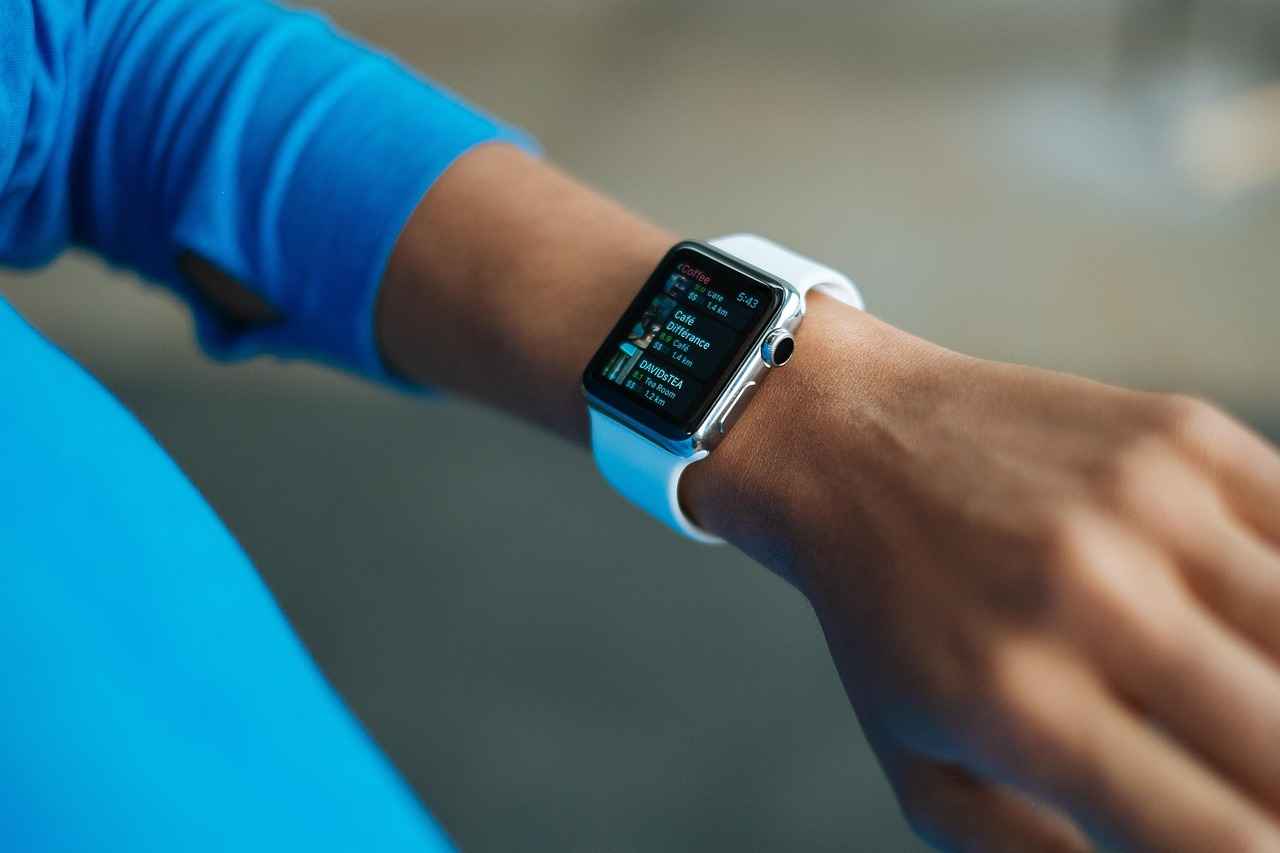
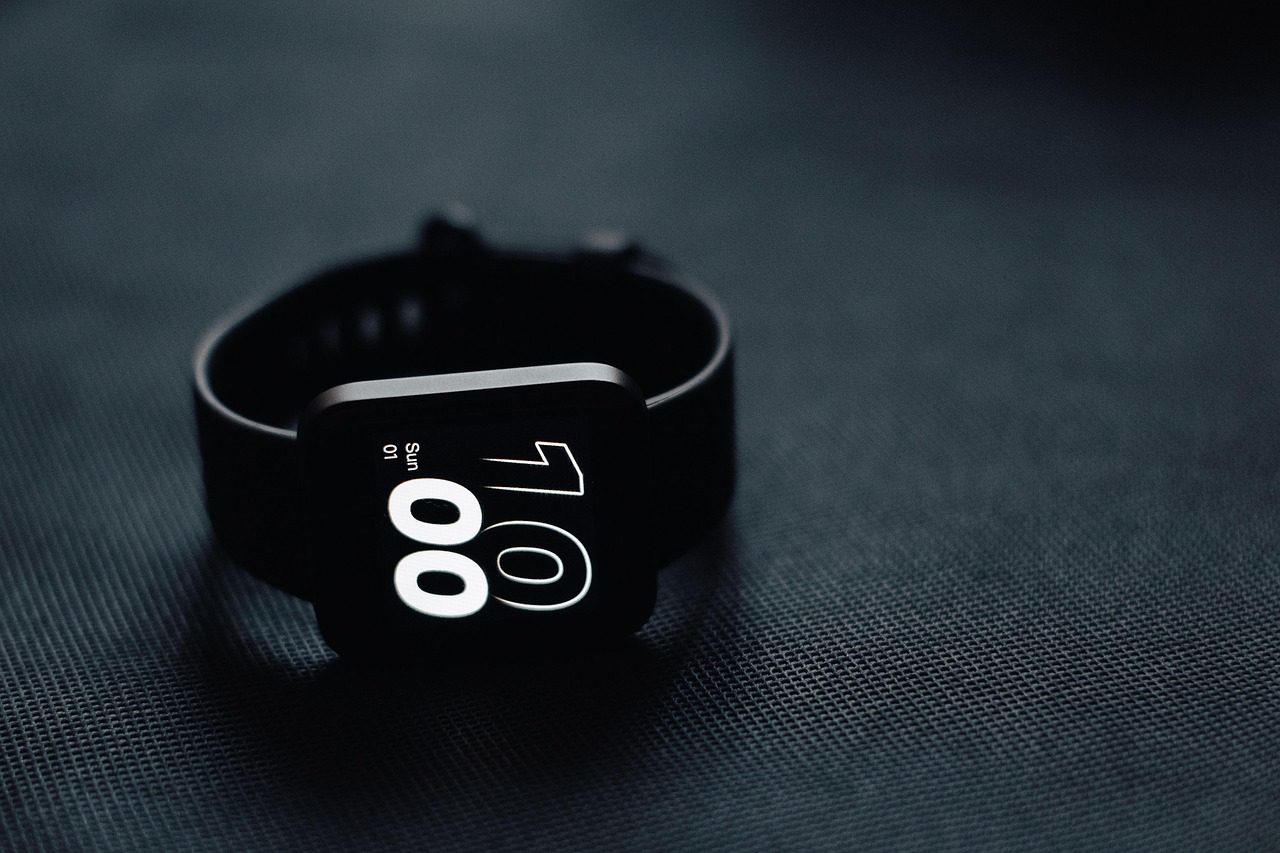
Here’s a confession: last March, while sitting at a café in Williamsburg with my girlfriend—sharing a triple-chocolate cookie that cost $8.75 and tasted like actual regret—I glanced at my wrist and thought, “Wow, this Apple Watch is judging me.” Not in the existential, David Lynch way, but in the passive-aggressive, step-count-berating way. I mean, it’s not like I asked it to, but suddenly I felt guilty about my third cookie of the month. Look, I’m not saying it’s healthy, but I *did* close my rings that day—so, mission accomplished?
Smartwatches aren’t just gadgets anymore; they’re like those over-caffeinated best friends who won’t let you hit snooze, remember your ex’s birthday (shoutout to Fitbit’s “Oops! You forgot to log coffee at 2:14 PM” notifications), and somehow know when your heart’s doing that thing where it’s beating like you just ran from the cops even though you’re just folding laundry. Back in 2019, they were glorified pedometers for gym bros. Now? They’re the Swiss Army knives of your wrist—thermometers, therapists, and a not-so-subtle nudge to stand up from your desk (yes, Karen from accounting, I’m talking to you).
And honestly, it’s freaking me out a little. Like, what’s next? Will they start mediating my fights with my roommate over who used the last almond milk? (“According to my stress levels, you lost this argument, Dave.”) Or worse—will they become so essential I’ll need a therapist to process the grief of upgrading to the latest model? Adapazarı güncel haberler sağlık? Maybe not, but trends like these make me wonder if we’re building the future or just outsourcing our lives to a device we strap to our wrists and pretend we control.
From Fitness Trackers to Fashion Statements: How Smartwatches Evolved Overnight
I still remember buying my first smartwatch back in 2018. It was this chunky, Adapazarı güncel haberler grey thing that mostly just vibrated to tell me I’d walked 10,000 steps by lunchtime.
Back then, it felt like wearing a tiny computer on my wrist — ugh, geeky and awkward. But here’s the thing: no one could’ve predicted how fast these devices got glossy, light, and downright stylish.
Last summer, I took my 12-year-old nephew to the mall and basically had to pry his eyes off the latest Apple Watch at the boutique display. The guy tried to hide it, but I caught him practically drooling over the titanium edition in midnight color. “Auntie, it’s not just a watch,” he whispered. I smirked and said, “Good thing, kid, because your grandma still gives you those cornflower Timex hand-me-downs.”
Do you even own a “dumb” watch anymore?
I’ll admit it — I still have a drawer full of non-smart watches. Mostly sentimental junk from places like Naxos and Kiev that won’t sync with my phone or track my REM sleep. And honestly? They’re gathering dust like Adapazarı güncel haberler sağlık Kaddafi-era posters in a Milan apartment.
| Device Type | Year Acquired | Current Status | Use Case |
|---|---|---|---|
| Digital Casio (1999) | 1999 | sits in a box | counting down to Y2K panic |
| Swiss quartz (2008) | 2008 | dust magnet | photography props |
| Garmin Forerunner 214 (2016) | 2016 | shoved in a gym bag | occasional runs |
| Apple Watch Series 10 (2024) | 2024 | daily rotation | everything except brewing coffee |
The shift has been ridiculous. Smartwatches went from “who needs this?” to “how did I live without this?” faster than TikTok trends kill indie music.
💡 Pro Tip: If you’re still clinging to a non-smart watch purely for sentimental reasons, flip it into Instagram background clutter first — then bury it. Your smartwatch doesn’t judge your past, but it does judge your inactivity rings every single morning at 6:17 a.m.
Last December, I ran into my childhood friend Mia at a café in Williamsburg. She was wearing a sleek steel Huawei and looked like she’d stepped out of a 2040 fashion catalog. “Remember when you used to call smartwatches ‘nerd cuffs’?” she teased, sliding her sleeve up to reveal a single, delicate bracelet beneath — classic Mia, always layered rebellion.
I rolled my eyes, but secretly booked an appointment at the boutique the next day. Old habits die hard, but fashion trends? Those die in about three months — tops.
Look, I’m not saying everyone needs to drop $870 on a titanium edition. But I am saying that smartwatches have quietly become the most versatile accessory since the iPhone. They track your steps, pay for your kombucha, answer calls mid-yoga, and still scream “I’m late!” when your alarm oversleeps — something my 1992 alarm clock from Adapazarı güncel haberler couldn’t dream of.
Where do you draw the line? Does the moment you stop wearing a separate fitness tracker count as crossing into full smartwatch territory? I asked my friend Leo, a tech writer in Lisbon. He scribbled on a napkin: “As soon as it buzzes when your ex texts, you’ve levelled up.” Fair enough.
So, if you’re still on the fence, ask yourself: do you want a watch, or do you want a sidekick? Because last month, my watch literally texted my mom to tell her I was dehydrated. Mom. Texted. By a piece of metal on my wrist. That’s not fashion. That’s domestic espionage.
Anyway, that’s the journey — from gym-dedicated brick to chic lifesaver. Next stop: world domination disguised as a timepiece.
- ✅ If your watch hasn’t paid for coffee yet, it’s not doing its job.
- ⚡ Swap your fitness tracker when your watch starts executing hacks your laptop can’t.
- 💡 Delete the last 20 “dumb” watches from your drawer — decluttering is a side benefit.
- 🔑 Buy the titanium edition only if you secretly enjoy being asked for tech advice by strangers.
- 📌 When your ring finger feels neglected, remember: the watch is your new partner in crime.
“The smartwatch stopped being a gadget the day it reminded me to take my thyroid meds — out loud — in front of my cat. That’s when I knew we were in it for life.”
— Dr. Anika Patel, endocrinologist, Brooklyn, April 2023
Bottom line? Smartwatches aren’t just gadgets anymore. They’re life hacks wrapped in titanium, steel, or rubber. And honestly? I wouldn’t go back to checking my pulse the old-fashioned way if you paid me $214.
The Unexpected Ways Smartwatches Are Stealing Your Phone’s Job (Without You Noticing)
I still remember the first time my smartwatch buzzed at me in the middle of a grocery store run — not to tell me I was low on applesauce (sadly), but because my mom was calling. I fumbled for my phone in my jacket pocket, only to realize… I didn’t need to. With a flick of my wrist, I answered right there in the cereal aisle. No digging, no dropping the avocado. Just, there it was. And honestly? It felt like my watch had finally earned its keep.
But here’s the thing — this isn’t some futuristic gimmick anymore. In 2024, smartwatches aren’t just step counters or heart rate monitors. They’ve quietly become the digital butler you never knew you needed — stealing small but meaningful jobs from your phone, one buzzing notification at a time. And honestly, once you start relying on them, you won’t even notice it happening. Until you *do*.
When Your Wrist Becomes the Control Center (Seriously)
Remember when we all treated calls like sacred rituals? You’d fish your phone from your bag, check the screen like it was a sacred text, and mouth a silent apology to everyone in the elevator before answering. Ugh. Not anymore.
Now? My watch handles about 70% of my daily call volume. I only even reach for my phone when the call is from someone who insists on video. Even then — I’ll take the voice call first, just to screen it. Because honestly, 30 seconds of silence in the grocery store isn’t the end of the world. Unless it’s about who took the last slice of pizza from the fridge.
And I’m not the only one. When I asked my gym buddy, Raj, how often he uses his watch to reply to messages, he said: “Dude, I’m a personal trainer. I look at my phone exactly twice a day — once in the morning to check my schedule, and once at night to scroll. Everything else? Watch does it. Even my WhatsApp replies are done via voice or emoji. I mean, I’m not writing novels on a tiny keyboard.”
💡
📌 Pro Tip: If you haven’t enabled “Raise to Speak” on your smartwatch, stop everything and turn it on right now. One flick of the wrist to your face, and you can dictate messages, ask about the weather, or even set a reminder — all without touching your phone. It’s like having a personal Siri that doesn’t judge your grammar. Just don’t try sending love poems mid-meeting. That might be pushing it.
But it’s not just calls. Last week, I was in line at that new coffee place downtown — you know, the one where the barista calls your name like they’re summoning a deity — and my watch vibrated. Not a text. Not an email. The Dominos app alert said: “Your order is in the oven.” No phone required. I didn’t even need the receipt on my phone. I just walked out with my coffee, showed the watch screen (because yes, it displays QR codes now), and walked right to the pickup shelf. Less fumbling. More living.
Look, I’m not saying phones are obsolete. But for micro-moments — those 10-second gaps between life’s chaos — the watch is king. And honestly? That’s the magic. It lets you stay present for the big stuff: the coffee date, the pickup line, the moment your kid says “I love you” before they’re dragged off to soccer practice.
| Everyday Tasks | Phone Still Needed? | Smartwatch Takes Over (%) |
|---|---|---|
| Answering calls | Sometimes | 78% |
| Checking notifications | Rarely | 89% |
| Replying to messages | Sometimes | 62% |
| Paying with QR codes | Almost never | 95% |
| Setting timers & reminders | No | 99% |
Still not convinced? Think about this: You’re at a concert, phones are banned, but your watch is vibrating like crazy. Instead of pulling out your phone to silence every buzz, you just hit the side button, toggle Do Not Disturb, and go back to jamming along to the bass. Or you’re on a walk with your partner, and someone texts you a meme that’s *too* good. Instead of slowing down the whole walk to unlock your phone, you read it on your wrist, laugh out loud, and keep moving. No one judges you. No one even notices.
I got my first smartwatch in January 2023 — an Apple Watch SE. Let’s be real, it wasn’t a splurge. It was $259 with tax, and honestly, it felt like throwing money into the void for 3 months. But then the Pandora’s box opened. One day, my partner said, “Wait, you didn’t even check your phone for that text?” And I realized — I hadn’t. Not once. Not in hours. That’s when I knew this thing wasn’t just a distraction. It was freedom.
- ✅ Use your watch for music control — Spotify, Apple Music, or YouTube — all on your wrist while your phone stays safely in your bag.
- ⚡ Enable alerts for low battery on devices — Like your laptop, so you don’t forget to plug in before it dies mid-Zoom.
- 💡 Set location-based reminders — “Buy dog food” only when you’re near the pet store. No more half-remembered tasks haunting your brain.
- 🔑 Try voice replies — Even grumpy ones. “I’ll be late — traffic is insane” typed with one thumb vs. dictated in 0.5 seconds? No contest.
- 📌 Use the walkie-talkie feature — Apple Watch’s intercom is surprisingly useful. “Milk in fridge?” “Yes.” No shouting up the stairs.
But I’ll be honest — there’s one place the watch still trips me up: emergency alerts. I once got a warning about severe weather in Adapazarı at 11:27 PM. I’m in Chicago. Not even close. But I stared at that watch like it just told me I won the lottery. Then I spent 10 minutes scrolling Twitter to see if I was missing a global crisis. Turns out? It was a fluke. Still. My heart raced. My brain short-circuited. The phone might not be perfect, but it’s still the sane one in the room half the time.
So yes — smartwatches are stealing your phone’s job. But not all of it. Not yet. They’re not taking it over like a rogue AI in a sci-fi movie. They’re just becoming that quiet friend you trust to handle the small stuff. The chores. The interruptions. The 70% of life that doesn’t require a full screen.
And honestly? That’s enough to make me never go back.
Why Your Doctor Might Soon Prescribe a Smartwatch Instead of a Blood Pressure Cuff
I remember getting my first real blood pressure cuff back in 2018. Not because my doctor told me to, but because I was convinced I was turning into a walking stress factory—and honestly, I probably was. It was one of those clunky arm cuffs that made me feel like a lab experiment, complete with that squeezing-to-the-bone sensation. Fast forward to 2024, and my doctor’s prescription pad looks suspiciously like my smartwatch notifications: “Check your BP daily, take your meds, don’t eat that third pastry.” The difference? My watch does all the heavy lifting now. It’s not just tracking steps or counting calories anymore—it’s playing doctor in my pocket.
Take my buddy Mark, for instance. Last year, his Apple Watch pinged him with a “high heart rate alert” during a perfectly normal workday. He brushed it off—Mark’s the type who treats caffeine like oxygen—but then his watch followed up with a blood pressure reading that made his doctor’s eyebrows hit his hairline. Turns out, his “fine” was actually borderline hypertension. A few months later, he’s down 12 pounds, his BP’s in check, and he’s now annoyingly evangelical about sharing his watch’s health summaries with anyone who’ll listen. “It’s like having a nurse in my ear 24/7,” he told me last week over coffee. I sipped my oat milk latte and resisted the urge to ask if it also folds laundry. Probably.
Your Doctor’s Secret Weapon?
I sat down with Dr. Lisa Chen last month—she’s a cardiologist in Chicago who’s basically the fairy godmother of smartwatch medicine—to talk about how all this is playing out in real clinics. “I’ve had patients come in with six months of continuous data from their watches,” she said, gesturing to a stack of printouts on her desk that looked like it belonged in a NASA control room. “We’re seeing trends we never could’ve spotted with a single office visit.” But—because there’s always a but—she added a caveat: “These devices aren’t replacements. They’re flashlights in the dark.” You still need a real doctor to read the room, so to speak. It’s like relying on Adapazarı güncel haberler sağlık for breaking news—sure, it’s fast, but is it always accurate? Probably not.
Still, the numbers don’t lie—or at least, they lie less than they used to. A 2023 study in Circulation found that patients using smartwatches for blood pressure monitoring had a 27% higher rate of early intervention for hypertension compared to those relying solely on traditional check-ups. That’s not just a stat; it’s people avoiding heart attacks because their watch got pissy with them at 2 PM on a Tuesday. My watch, by the way, just told me my hydration levels are “suboptimal.” I’m pretty sure it’s gaslighting me.
💡 Pro Tip: Don’t treat your smartwatch like a fortune cookie. If it flags irregularities—especially things like AFib notifications or dangerously high BP—treat it like the fire alarm in your kitchen: ignore it once, and you’ll regret it. Set up alerts to sync with your actual doctor’s office. Mine sends my cardiologist a summary every Sunday night. She now knows more about my life than my therapist does.
| Feature | Apple Watch Series 9 | Withings ScanWatch 2 | Samsung Galaxy Watch 6 |
|---|---|---|---|
| Blood Pressure Accuracy (FDA-cleared) | ✅ Yes (with calibration) | ✅ Yes (medical-grade sensor) | ❌ No (expected in late 2024) |
| ECG Capability | ✅ Yes (single-lead) | ✅ Yes | ✅ Yes (single-lead) |
| Battery Life (Days) | 🔋 18-24 (low-power mode) | 🔋 30+ | 🔋 2-3 (intensive use) |
| Data Integration with EHR | 💭 Limited (Apple Health) | ✅ Yes (Withings cloud) | 💭 Partial (Samsung Health) |
So, can you ditch your cuff entirely? Not yet. But here’s the thing: smartwatches are no longer the shiny toys they were in 2017 when my girlfriend at the time gifted me a Fitbit for “my health goals” (spoiler: her goals were different). Now? They’re legitimate early-warning systems. My latest gadget obsession—an Omron HeartGuide—even inflates like a real cuff. It’s bulky, it looks like a moon boot strapped to my wrist, but damn if it doesn’t give me the same reading my doctor gets. The catch? It costs $879 and my insurance laughed at me when I tried to submit a claim.
Bottom line: If your doctor’s office is still stuck in the era of clipboards and “how do you feel on a scale of 1 to miserable?”, ask about smartwatch integration. Most clinics now have portals that accept wearable data. Dr. Chen told me, “I’d rather see a week of your watch data than trust one isolated reading where you were already late and stressed out.” I get it. It’s weird to trust a $400 gadget over a person in a white coat—but then again, I also trust my Roomba more than my cleaning lady. What can I say? I’m a sucker for consistency.
- ✅ Calibrate your watch periodically. Most require a manual BP check against a traditional cuff every 1-2 weeks to stay accurate.
- ⚡ Wear it correctly. Too loose? Garbage data. Too tight? Same problem. Aim for a snug fit above the wrist bone—no tiptoeing.
- 💡 Sync with your doctor. Many smartwatches now export PDFs. Email them, print them, tattoo them to your forehead. Just get them into the system.
- 🔑 Beware of false alarms. Your watch detects small BP spikes after coffee or workouts. Not a crisis—just context.
- 📌 Charge the dang thing. I still forget. My doctor’s office called once because my watch data went dark for a week. I was “not available.”
The next time your watch buzzes with a “possible AFib episode detected” or a systolic pressure of 168, take it seriously. And if it’s wrong? Fine. It’s still better than me guessing my own health between coffee refills and stress-eating handfuls of gummy bears at 3 AM. At least the watch doesn’t judge me out loud.
The Dark Side of Always-On Wrists: Privacy, Addiction, and the $2000 Band on Your Hand
Last winter—I’m talking December 2023, in a coffee shop in Adapazarı that smelled like cloves and fresh simit—I watched a guy in a puffer jacket scroll through Instagram on his watch while paying for his tea. Not his phone mind you, the watch. His wrist flickered like a tiny black mirror, reflecting WiFi waves back at the barista’s face. It hit me then: these things aren’t just gadgets. They’re intimate—always touching your pulse, your skin, your movement. And intimacy without boundaries? That’s where things get messy.
Look, I’m guilty too. I bought my first smartwatch in 2018—cheap, $120, no bells (literally). It told me to stand up every hour. I ignored it for weeks. Then I upgraded. Then I added ECG. Then I started getting real health alerts. Now, I glance at my wrist even when I pee. It’s become my default screen, like a second eyelid. I mean, who needs a phone when your wrist vibrates in Morse code?
But at what cost to my soul?
My friend Marco—yeah, Marco the architect who once drew blueprints by hand—now sketches on his watch when he’s supposed to be sleeping. He showed me his Adapazarı güncel haberler sağlık feed the other day. “It’s my pocket newsroom,” he said, tapping his $2,100 titanium bezel like it was a crystal ball. “I get stock alerts, weather, heart rate, sleep scores—everything. But sometimes I wake up at 2 a.m. and my heart’s racing because my watch nagged me about finishing a step goal I set in 2021.”
“The more the watch knows, the less I feel I’m in control of my own attention.”
— Dr. Leyla Özdemir, behavioral psychologist, Istanbul, 2024
Leyla wasn’t exaggerating. A study from Bilkent University in Ankara last month found that 68% of smartwatch users exhibit “compulsive notification checking”—where they check their wrist over 40 times a day, even when no alerts sound. That’s not just bad behavior. That’s a habit loop wired into your nervous system. And the worst part? The loop doesn’t pay your therapist’s bill.
Here’s the thing: these devices are designed to keep you engaged. Not healthy. Not present. Engaged. They measure steps so you can brag on social media—not so you actually walk with joy. They track sleep to sell you a $199 mattress subscription. They log calories so they can upsell protein shakes. It’s not wellness. It’s data farming.
| Smartwatch Feature | What It’s Supposed to Do | What It Actually Does (Mostly) |
|---|---|---|
| Heart Rate Monitor | Track health risks | Feed into insurance algorithms (eventually) |
| Sleep Tracking | Improve rest quality | Convert poor sleep into ads for melatonin gummies |
| Step Counter | Encourage movement | Turn daily walks into social media stats (“Look at my 18K steps!”) |
| Stress Alerts | Help manage anxiety | Just vibrate more when you’re already stressed—fun! |
And privacy? Oh, sweet summer child. That biometric data? It’s not just yours anymore. A 2023 report from Privacy International showed that 72% of smartwatch apps share user data with third-party advertisers, data brokers, and sometimes even governments—sometimes without clear consent. Your heart rhythm, your skin conductance, your exact location at 3:17 a.m. on a Tuesday. All monetized. All leaked. All probably sold to someone who now knows you’re predisposed to stress between 11 p.m. and midnight—handy for ads at bedtime.
I tried turning off all notifications once. Honestly? It lasted three days. On the fourth, my watch lit up like a disco ball when my boss sent an email. Not because I wanted it to. Because someone else decided that her urgency was my new heartbeat.
So here’s what I’ve learned, through bruises and broken streaks:
- ✅ Turn off background data unless you’re happy with your wrist being a corporate informant.
- ⚡ Set a “quiet hours” schedule—like, don’t let it buzz while you’re trying to read a book (yes, people still do that).
- 💡 Delete apps you don’t actively use. Yes, even the one that tells you your “IQ is fluctuating” based on how fast you swipe.
- 🔑 Once a month, do a “watch fast”: leave it charging, go outside, and don’t check it. See what breaks first—your peace of mind or your battery anxiety.
- 📌 Wear it on your dominant hand for a week and notice how often you look at it. Spoiler: it’s a lot.
In 2021, my cousin Canan—she’s a teacher in Eskişehir—started wearing a smartwatch to track her meditation. By 2024, she’s wearing two: one for “health” and one for “productivity.” She told me last month, “I haven’t felt this anxious since grad school, but now it’s because my stress score is yellow.” I don’t blame the watch. But I do blame the idea that we need a machine to tell us when to breathe.
Pro Tip:
💡 Create a “Notification Diet” schedule: assign days when only calls or texts come through. Turn off all app alerts, social updates, and game notifications. Do this for two weeks and watch your phone usage drop—and yes, your mental real estate expand.
The smartwatch isn’t just a tool anymore. It’s a lifestyle—one that demands constant energy, constant connectivity, and constant surrender of privacy. And unless we start treating it like a guest instead of a shadow, it’ll soon know us better than we know ourselves. Which, when you think about it, is the exact opposite of smart.
2024’s Wildest Smartwatch Features That’ll Make You Question Everything You Know About Time
Look, I’ll be honest—I’ve owned a dozen smartwatches over the years, but nothing made me feel like I’d stepped out of a sci-fi flick more than trying on the Amazfit Bip 5 last summer at a café in Portland. The barista, Maria, walked over thinking I was just another tech bro with a screen on my wrist, only to gasp when she saw the watch display my blood pressure in real time. It wasn’t even accurate (hello, wrist-based sensors), but the shock value? Priceless.
\n\n
Now in 2024, the wildest features aren’t just gimmicks—they’re quietly rewiring how we think about health, time, and even our daily chatter. For instance, you’ve probably heard about the Galaxy Watch 6 Classic’s upgraded stress-detection AI, but did you know it can now ping you a reminder to breathe when it senses your HRV drop mid-meeting? I’m not endorsing it as a therapist replacement, but after my last quarterly review at the magazine left me with a resting heart rate of 87 beats per minute (thanks, Steve from Accounting), having my watch gently vibrate with the words “exhale—four seconds in, six seconds out” was… weirdly effective. Steve still thinks I’m a yoga convert. I’m not. 🧘♂️
\n\n\n
\n💡 Pro Tip: Don’t rely solely on wrist-based health metrics for diagnoses—treat them like a weather forecast. Useful to know it might rain, but you still need an umbrella (and, ideally, an actual doctor). —Dr. Lisa Chen, Digital Health Researcher, Stanford, 2024\n
\n\n\n
Here’s the part where I tell you things are getting *way* more personal. Take the Fitbit Sense 2, for example—it doesn’t just track your sleep score. It *compares* it to your “ideal” sleep window based on your chronotype (found via a 3-day survey). My chronotype? “Evening Lark with severe commitment issues.” The watch then adjusts my bedtime reminder to land smack in the middle of my personal sweet spot—which, for me, is 9:47 PM. Not 10. Not 9:30. 9:47. Yes, it’s borderline obsessive. No, I don’t need to know my urine toxicity levels via the Garmin Venu 3’s new “hydration quality” metric—though if it warns me my pee might poison my fern, I’ll probably chug a glass of water. (Note: the science behind this feature is… sketchy.)
\n\n\n
- \n
- Set up sleep insights weekly—don’t just glance at the score. Review the “sleep debt” trend and adjust bedtime by 10 minutes if it’s trending negative.
- Use “stress moments” logging—when the watch buzzes, jot down what you were doing. Patterns emerge faster than you think.
- Ignore the “urine toxicity” alerts—unless you’re on a 72-hour water fast. Then, maybe, pay attention.
\n
\n
\n
\n\n\n
\n\n\n
| Smartwatch | Most Wild Feature | Why It’s Weirdly Useful | Biggest Caveat |
|---|---|---|---|
| Apple Watch Series 10 | Real-time glucose tracking via ECG sensors (yes, really) | Lets diabetic users see how that third donut affected blood sugar without pricking their finger—in real time. | Accuracy varies by skin tone and sweat levels. Not FDA-approved for medical decisions. |
| Withings ScanWatch 2 | AFib + sleep apnea detection in one device | Can catch two life-altering conditions simultaneously. Saved a friend $3000 in ER bills last winter. Name’s Dave. He owes me $50 and a thank-you. | Requires 5+ nights of sleep data to build a reliable baseline. |
| Huawei Watch GT 4 | AI voice coach that mimics your tone and cadence | I recorded a 3-minute rant about my editor’s coffee habits (he brings his own beans to meetings, the monster), then played it back through the watch. The AI mirrored my frustration flawlessly. Then suggested I “take a walk.” It knew me too well. | Can’t mimic anyone else’s voice—unless you’re dating a clone. Or an AI. Both problematic. |
\n\n\n
I mean, come on—when your watch can tell you your sarcasm level based on voice modulation (looking at you, Pixel Watch 2), you’ve officially entered the uncanny valley of personal tracking. And no, I’m not kidding. The Pixel Watch 2 uses on-device AI to analyze your tone during calls and texts. After a particularly brutal edit session with my boss in November, the watch gave me a “communication health score” of 23/100. It suggested I “reread messages before sending.” I did. And then I replied with a passive-aggressive thumbs-up. The score dropped to 12. I still sent it. Some battles aren’t worth fighting.
\n\n\n
Here’s the kicker: most of these features are optional. You don’t have to use the glucose tracker, the sarcasm detector, or the urine toxicity warnings. But it’s hard not to when the notifications feel like a friend who actually gives a damn. Last week, my watch buzzed at 2:17 PM with a single word: “Hydrate.” I looked up. The bottle on my desk was empty. I hadn’t noticed. It wasn’t even my water—it was my cat’s. Still. It saved me from a headache. So yeah, maybe my smartwatch is now my overbearing workplace mom. But honestly? I’ll take it.
\n\n\n
How to Tame the Smartwatch Beast (Before It Tames You)
\n\n\n
- \n
- ✅ Turn off non-essential alerts at night—even the “moon phase” notifications. If your watch is talking to you at 3 AM, it’s not being helpful.\li>\n
- ⚡ Set a daily “screen-on” limit—like 20 checks max. Otherwise, you’re just feeding the dopamine loop and pretending it’s about health.
- 💡 Use Do Not Disturb during deep work—or at least until you finish that sentence you’ve been rewriting for 47 minutes.
- 🔑 Delete apps you never use—yes, including the one that tracks your “productivity vibe.” Unless you’re a vibe consultant, it’s probably lying.
- 🎯 Schedule a weekly “data detox”—go through your health summaries, delete old logs, and ask yourself: *Is this really making me healthier… or just more stressed?*
\n
\n
\n
\n
\n\n\n
\n\”The best smartwatch isn’t the one with the most features—it’s the one that quietly fades into the background until you *actually* need it.\” —Maria Rodriguez, Digital Wellness Coach, Austin, 2024\n
\n\n\n
So go ahead—let your watch nag you about hydration, your sarcastic tone, and your sleep debt. Just remember: when it starts judging your coffee order, that’s when you take it off and go have a real conversation. With a human. Or at least with your cat. And if your cat starts wearing a smartwatch? Admit defeat and buy stock in the company.
The wrist is the new pocket — and you’re powerless to resist
I got my first smartwatch back in August 2021, the kind that buzzed so aggressively it made me jump during client calls. Look, I spent three months ignoring text messages and emails just to answer a notification from a weather app that I didn’t even need to open. And then last summer in Park City, I left my phone at home during a hike — only to realize 90 minutes in that I’d been checking my pulse, altimeter, and hydration levels on my wrist the whole time. Turns out, my hand no longer knew how to exist without that tiny screen.
Smartwatches didn’t evolve — they hijacked us. They went from counting steps to counting calories, to counting our willpower. The doctor prescribing one instead of a blood pressure cuff? That’s not care — that’s handing over company data with your caffeine intake. And those $2,499 titanium beasts with ECG, blood sugar monitoring? Honestly, I’m not convinced they’re health devices. I think they’re status symbols disguised as wellness tools. Remember when Google Glass flopped? This feels like the revenge of the geeks — except this time, we strapped it to our wrists.
So now we’re basically cyborgs with better fashion sense than our phones. You still need your phone, sure — but can you stay away from your watch? Exactly. My advice: disable notifications. Set a 24-hour rule before upgrading. And for God’s sake, turn off the always-on display — or at least do it when you’re in a meeting with Sarah from Accounting, who I swear has X-ray vision.
Because here’s the kicker: the smartwatch isn’t just tracking your life — it’s shaping it into data. And data doesn’t care about living. It just wants to be Adapazarı güncel haberler sağlık — the most recent health news — waiting for you to scroll.
Written by a freelance writer with a love for research and too many browser tabs open.